A wish is about intent. Folktales across the world warn of dealing with wish-granting entities. They will try to trick you. They will twist your words, find the worst interpretation of your deepest desires, seize on the tiniest fault line and pry it open to reveal a cautionary tale. You must be careful with your words. You must consider how badly you want whatever it is, and weigh it against the potential consequences. Otherwise, tragedy ensues, and you have nobody to blame but yourself.
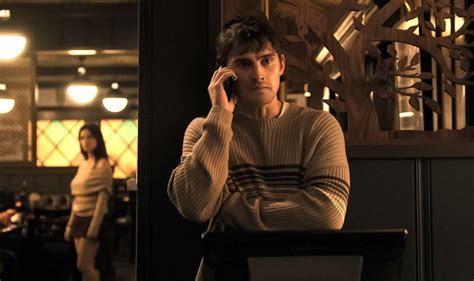
Bear, the protagonist of Curry Barker’s lean, nasty Obsession, is the kind of aimless slacker immortalized in 80s comedies everywhere, a wallflower who inherited his grandmother’s house, works at a music store seemingly staffed exclusively by his high school friends, and has no personality or ambitions outside of mooning over Nikki, the girl of his dreams. I say ‘girl’ purposefully here—the characters are twenty-five, but their dynamics haven’t evolved since freshman year, and Michael Johnston plays Bear with a self-conscious affect that makes him read as an overgrown seventeen-year-old. He is, as his friend Ian points out, still trying to ask her to prom. Initially, this can read as sympathetic, especially if you’ve ever been in unrequited love. He’s a little too intense, a little pathetic, but that doesn’t make someone irredeemable. And indeed, it’s neither of those things that drive him to ruin the lives of everyone around him. It’s his anxiety, an anxiety that shoots well beyond social awkwardness to land in apathetic, arrogant cowardice. He wants what he wants, and he wants it without having to be vulnerable in return. The film isn’t subtle about this, either. It smash-cuts to the body of Bear’s cat Sandy about five minutes in, having overdosed on his grandmother’s medicine. He didn’t kill Sandy, of course. He’s devastated. But the medicine cabinet is open, the bottles not closed properly, his carelessness evident in every ensuing frame. The foreshadowing is clear: like Sandy, Nikki is cherished, but she’s also collateral damage.
The whiplash of these early scenes as they pivot from cringe comedy to stark upset are meant to make you squirm. Horror, like comedy, is deeply subjective; both rely on timing and a controlled ratcheting/release of tension, and often in ways that put the two genres at odds. It’s hard to do one decently. Doing both well is a minor miracle. But like this year’s other minor miracle Widow’s Bay, Obsession threads that needle with a steady hand, and while turning romantic tropes into sites of horror isn’t new, it’s rare to see it done in a way that feels this unflinching.
Case in point, the scenes just before/during/just after trivia are lit and framed in such a way that you can see the romantic comedy playing in Bear’s head—he’s directing in real time, and Nikki’s attempts to step out of the leading role are ignored (anyone who has been the object of an obvious, unwanted crush will recognize her paying for drinks over his objections and becoming nervous at the prospect of a gift as subtle but concrete deflections of feeling like she might owe him something). It’s obvious he chooses not to tell her because she might insist he stay home, and so he can deploy it later to gain her sympathy, thanks to the strength of both the script and Johnston’s performance, which vacillates between a kind of walled-off fragility and desperate, grasping need. He is either uninterested or incapable of thinking beyond his next fix, his next smile from or interaction with Nikki, who is less a person in his mind than an avatar for all his impossible dreams. This is reflected in the timing of his impulsive wish outside her house. He’s not trying to hurt her, but even the specter of rejection is too much to handle.
(Another detail I appreciate: he initially goes the shop to buy her a replacement crystal necklace, but after looking at one option and deciding she’d hate it, he buys the One Wish Willow instead and says it’s for her, even though there’s no indication Nikki would be interested in a collectible toy from the 80s. Every single decision Bear makes erodes her personhood.)
That things devolve rapidly from here is no surprise. Obsession’s strength stems largely from its inevitability; the breakneck progression from A to Z that, thanks to its stellar cast and Barker’s confident directorial hand, feels both shocking and like it could have gone no other way. But the real secret weapon here is Inde Navarette, who turns a character that could have been a one-note cipher into a primal scream. Every aspect of Nikki’s transformation post-wish, from her exaggerated expressions to her slinking, inhuman body language and effortless vocal range, is grueling to watch. The scene where she watches Bear sleep is one of the most disturbing in recent memory for me; his palpable fear as he begs her to come back to bed, and her sharp, whispered “no” in the silence as she seems to rewind back into the corner, nearly made me come out of my seat both viewings. Every so often, you’ll get comparisons between a fresh new face in horror and its most iconic scream queens. The next Toni Collette, the next Isabel Adjani, so on and so forth. These are typically overblown and unnecessary. But I felt the same thing here as I did when I watched Nell Tiger-Free in The First Omen: she’s the real fucking deal.
Speaking of Nikki.
Criticism around Obsession stems largely from accusations of misogyny, both textual and meta-textual. The movie hates women because it shows misogyny at work, and/or because a man wrote it. Nikki has no interiority, and furthermore, it was wrong to write the script from Bear’s POV altogether. I can’t divine Curry Barker’s thought process beyond what he’s said in interviews, nor am I saying it’s wrong to hate the movie. I have no interest in telling someone their feelings about a specific piece of art are incorrect. I am, however, interested in the nature of these criticisms. I don’t believe depiction equals endorsement, nor do I believe the movie presents Bear as a good person who is entitled to Nikki’s affections. It’s clear about him every step of the way. What he is doing is wrong, it is viscerally repulsive, and it is meant to be uncomfortable for the viewer. It takes the empathy rom-coms have historically granted to men pursuing women through deceit and disregard, and curdles it to churn your guts. If it’s not clear enough for you by the time he has sex with the thing wearing Nikki’s skin after he realizes his wish came true, the script rubs your nose in it when the real Nikki surfaces long enough to beg Bear to kill her.
“Is being with me really so bad?”
“I’ve never been with you, Bear.”
This single exchange is one of the most bone-chilling moments in modern horror. Bear’s terror warping into a sullen pout in the unreal 2 AM light, Nikki’s exhausted whisper, and her increasingly frantic cries as he leaves are permanently burned into my memory; even after all this, you still don’t love me?, he’s realizing, and he punishes her for it. Even now, he doesn’t want to change his wish, or end her suffering. He just wants her to stop being so weird about it.
This isn’t a movie that hates women. This is a movie that hates selfishness, and Bear is selfishness incarnate. While there is an argument to be made that she lacks interiority, the truth is that we know more about her than we do Bear. She’s a writer, she hates her dad, she’s kind to outcasts and has casual sex when she feels like it and is quitting her dead-end job because she wants more for her life. Bear had a cat, he inherited his dead grandmother’s house, and he wants Nikki to love him. More than that, Nikki not being the POV character feels purposeful, meant to highlight that everyone projects onto her. For Bear, she’s his one true love, together forever when the credits roll; to Sarah, she’s the messy friend who gets away with too much, the former cool girl from high school taking advantage of poor sweet Bear (who just needs a third act break-up and a chill indie soundtrack to see Sarah’s the one he should be with); even Ian, seemingly the most mature member of the group at the outset, is re-contextualized in the scene where he accuses Bear of taking advantage of Nikki when Sarah later reveals that he thinks Nikki is dating Bear to get back at him. Nikki might be at the center of the movie, but not a single other character sees her as an autonomous person. Even before Bear’s wish lands her in an undefined hell, she’s already trapped.
Circling back to the beginning of this review: a wish is about intent. In-universe, the One Wish Willow isn’t inherently malicious or disastrous. Both clerks at the shop appear to have used theirs without issue, and there’s debate about whether or not it even works, suggesting some people make wishes so silly or unobtrusive they don’t even realize it’s been granted. It’s a brilliantly simple conceit that works in tandem with the rom-com coding of the script, because we as the audience have already been primed to understand what Bear means when he wishes for Nikki to love him. In the language of traditional romances, love is equated with possession. A subject acting upon an object to be won, often through a series of lies or gestures that would be considered violent in other contexts. Bear phrases his wish the way he does because this is a horror film, but it’s a horror film because he would never think to wish that, say, he could become the kind of man Nikki would fall for. To paraphrase Toni Morrison, love is never any better than the lover. The titular obsession isn’t Nikki’s. It’s his, reflected back at him.
This is the real horror at the heart of everything. That it asks you to empathize with Nikki, to be frightened and disgusted by what’s happening to her, to understand what is being done to her and that you, the audience, are now complicit in it—that’s what really makes Obsession worthwhile.